There Is No Finish Line: How to Plan, Prepare and Crew a Backyard Ultra
The bell goes. You’ve got three minutes.
You haul yourself out of the camp chair, where ninety seconds ago you were horizontal with your feet up and a cup of warm noodles balanced on your chest. Your crew shoves a fresh flask into your pack and says something encouraging that you don’t really hear. You shuffle into the corral with thirty other people who all look exactly as wrecked as you feel. A whistle. Then another. Then you’re running again — the same 6.706 kilometres you’ve already run eleven times today, on the same loop you’ll run again in an hour, and again the hour after that, until either you stop or everyone else does.
This is the backyard ultra. And I’ll be honest: I keep finding myself back on the entry page for Sydney’s Backyard Ultra, cursor hovering over the register button, equal parts fascinated and terrified. So I did what I always do when a race gets under my skin — I went down the rabbit hole on how to actually plan, prepare and crew for one. Here’s what I found.
What a backyard ultra actually is
The format is the brainchild of Lazarus Lake — the same gloriously sadistic mind behind the Barkley Marathons. The rules are almost insultingly simple:
- Every runner sets off together on a loop (“a yard”) of 4.167 miles — 6.706 km — on the hour, every hour.
- You must complete the loop and be back in the starting corral before the next hour begins. Whatever time is left over is your rest.
- Miss the start of a yard, or fail to finish one inside the hour, and you’re out.
- The race continues, hour after hour, until one runner remains — and that runner has to complete one final yard, alone, to be declared the winner.
Twenty-four yards gets you to almost exactly 100 miles (160.9 km) in 24 hours. But here’s the part that breaks people’s brains the first time they hear it: there is no set distance. There is no finish line. The tagline of the original event — Big’s Backyard Ultra, named after Laz’s dog and held in his backyard in Bell Buckle, Tennessee — is literally “There is no finish line.”
| The format at a glance | Detail |
|---|---|
| Loop (“yard”) | 4.167 mi / 6.706 km |
| Start interval | On the hour, every hour |
| Rest | Whatever’s left of the hour after you finish |
| 24 yards | ~100 miles / 160.9 km in 24 hours |
| How it ends | Last runner standing completes a final solo yard |
| Official finishers | Exactly one. Everyone else DNFs. |
That last row is the kicker. In a backyard ultra, everyone gets a DNF except the winner. The runner who pushed the eventual winner the furthest — the second-to-last person standing — is credited as the “assist.” Everyone else, no matter how heroic, is a “did not finish.” You can run 90 yards — nearly 600 km, further than almost any human has ever run — and still technically not finish the race. It’s the most psychologically brutal format in the sport, and that’s exactly what makes it compelling.
Why Australians should care right now
This isn’t a niche American curiosity anymore — and Australia is, improbably, at the centre of it.
In 2025, Phil Gore, a firefighter from Perth, ran 119 yards at the Dead Cow Gully Backyard Ultra in Queensland — that’s 798 km across almost five continuous days, and the current outright world record. Months later he flew to Tennessee and won the Big’s Backyard Ultra World Championship with 114 yards (475 miles). The women’s world record also fell in 2025, to the UK’s Sarah Perry at 95 yards. The numbers in this format are climbing at a frankly absurd rate.
And the local scene is booming. At Sydney’s Backyard Ultra in April 2026, Tim Kacprzak outlasted a field of 645 starters to win with 75 yards — 502 km / 312.5 miles — after a long duel with Jack Hanley, who stayed with him from yard 66 and took the “assist” as runner-up. The event runs out of St Ives Showground, it’s a “silver ticket” qualifier (the winner earns a spot representing Australia at the Satellite team World Championship in October), and the next edition lands at St Ives in September. If you want a first crack at the format on home soil, this is the one.
Why it breaks your brain (and how to set goals anyway)
Every other race you’ve ever done has a defined endpoint. You train for 50 km, or 100 km, or a sub-4 marathon. The finish is a fixed thing you move towards. Your goal is the finish line.
Take the finish line away and goal-setting gets weird. If you go in thinking “I’ll just keep running until I can’t,” you’ll quit the first time it gets genuinely hard — and in a backyard, everything after the first night gets genuinely hard. You need a different framework.
The trick is to set process goals and waypoint goals, not an outcome goal. You’re not trying to “win” (unless you’re Phil Gore). You’re trying to hit a sequence of concrete, achievable checkpoints:
- Yard 6 (40 km): Settle into the rhythm. Don’t be a hero. This should feel almost too easy.
- Yard 12 (~80 km): You’re past halfway to 100 miles. Day one is in the bag.
- Yard 18: Sunset and the switch to the night course. The mental game starts here.
- Yard 24 (100 miles / 161 km): The classic first-timer goal. Reaching 100 miles in 24 hours in your first backyard is a genuinely brilliant result.
- Beyond: Beat the sunrise. Run into a second day. Pick a yard number and chase it.
The mantra that every backyard veteran repeats is some version of: you are never running the whole race — you are only ever running the next loop. Don’t think about yard 30 at yard 8. Think about getting back to your chair, eating, resting, and getting out for the next bell. One loop. Then one more. The format only becomes unmanageable when you let your brain run the maths on how much is left. There is no “left.” There’s only the next yard.
Set your goal before race day, write it down, and tell your crew — because at 2am, sleep-deprived and sore, they are going to be the ones reminding you what you came here to do.
Race planning: the loop is the strategy
In a point-to-point ultra you plan around a course — climbs, descents, aid stations, cut-offs. In a backyard, the course is the same 6.7 km every single time. The strategy is entirely about how you spend the hour.
The buffer-versus-rest trade-off
This is the central tension of the format. Finish the loop fast and you get more rest in your chair — but you’ve spent more energy doing it. Finish slow and you conserve energy — but you might come back with only five minutes to eat, change, and recover before the next bell. Cross the line after the hour and you’re done.
The sweet spot for most people is a loop that leaves 10–15 minutes of rest in the chair. On Sydney’s day course — a flat-ish mix of dirt, grass, road and fire trail — that means cruising the 6.7 km in around 45–50 minutes: a relaxed run-walk, never pushing. The golden rule, repeated by everyone who’s ever done well at this: run the early loops slower than feels necessary. The energy you save in the first day is the energy that keeps you in the race on the second.
Day course vs night course
A nice quirk of Sydney’s event (and many backyards) is that there are two courses. The longer, more varied day loop runs in daylight; once it’s dark, runners switch to a flat, fast night course designed for quick, safe loops in the beam of a head torch. Plan for the change: your night loops can be more efficient, banking you precious extra minutes of rest exactly when you need them most. A head torch is mandatory overnight (roughly 5pm to 6am), so have it charged, plus a backup, sitting ready in your camp.
The corral routine
Where backyards are won and lost is in those few minutes between finishing one loop and starting the next. You want a routine so dialled that you barely have to think:
- Cross the line, walk straight to your chair.
- Sit. Feet up if you can.
- Eat and drink immediately — don’t wait until you feel like it.
- Deal with any one problem (a hotspot, a layer, a refill). One thing per loop.
- Get up at the three-minute bell. Be in the corral, no excuses.
Practising this routine in training — yes, actually rehearsing the transition — is one of the highest-value things you can do.
Preparation: training for the race with no finish
A backyard ultra demands a different kind of fitness than a mountain 100. There’s almost no elevation and no technical terrain to worry about, which sounds easier — until you realise the challenge has simply moved. It’s now about relentless repeatability and sleep deprivation, not raw climbing legs.
The aerobic base still comes first, and the fundamentals don’t change — if you haven’t built one before, start with the ultra training plan principles (the pyramid, weekly volume over daily rigidity, back-to-back long runs). On top of that base, layer in the backyard-specific work:
- Rehearse the on-the-hour rhythm. The single best simulation is a “DIY backyard”: run a 6.7 km loop, on the hour, for as many hours as you can manage. Even a 6–8 hour version on a weekend teaches your body the brutal truth that rest is short and the bell is merciless. This is also where the 4x4x48-style sessions earn their keep — running on broken sleep across many hours is the exact stressor you’re training for.
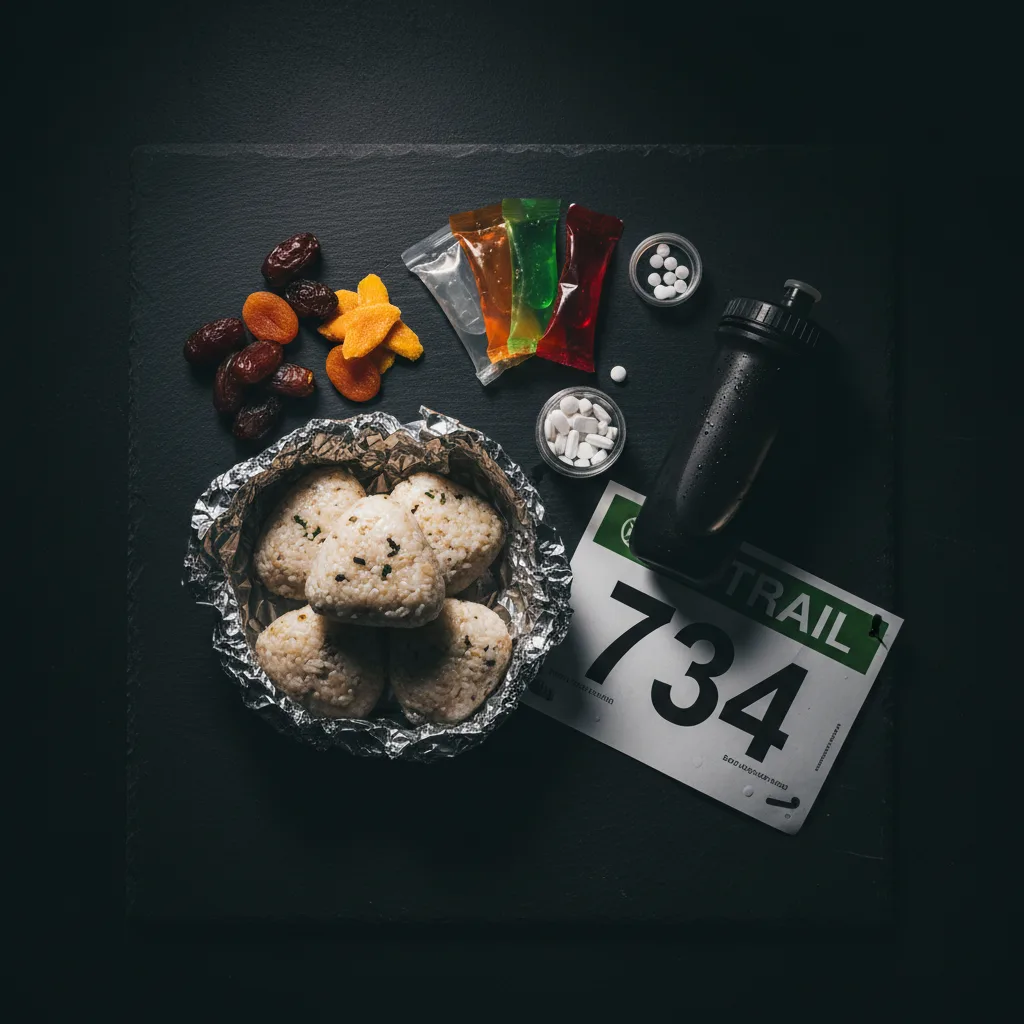
- Train your gut to eat on repeat. You’ll be eating something almost every loop for a full day or more. Practise eating real food on the move and in the chair. Dial this in properly — the science of race-day fuelling applies in full, but the backyard wrinkle is variety and volume sustained over many hours. Sweet things stop working around hour ten; have savoury and warm options ready.
- Practise sleeping on command. This sounds mad, but it’s a real skill the top runners train. When your loop only buys you twelve minutes of rest, a five-minute micro-nap is gold. Phil Gore is famous for being able to fall asleep in his chair almost instantly. Practise lying down and switching off in short windows.
- Walk-run, don’t run. Most successful backyard runners walk a portion of every loop, even early on. Drilling a comfortable, efficient walk-run rhythm pays off far more than top-end speed.
The crew guide: the hardest job at the race
Here’s a line I read while researching this that stuck with me: the only thing crazier than running a backyard ultra is crewing one. And it’s true. A good crew is arguably worth more in this format than any other in the sport, because they manage the one resource you can’t afford to waste: the minutes between loops.
If you’re crewing — or recruiting someone to crew you — here’s what the job actually involves.
You run a 60-minute cycle, just like the runner. From the moment they cross the line you have maybe 10–15 minutes to turn them around. Every cycle: get food and drink into them, solve the one problem of the loop, get them resting, then get them up and moving to the corral on time. Then you have 45 minutes to prep for the next turnaround, eat and rest yourself, and watch the clock like a hawk.
Have everything laid out and labelled. A chaotic camp costs minutes you don’t have. Food sorted into sweet/savoury/warm. Flasks pre-filled and lined up. Spare socks, spare shoes, layers, head torch, chargers, anti-chafe, blister kit — all in known spots so you can find them in the dark without thinking.
Know the rules cold. At Sydney’s event you can only assist the runner once they’ve completed a yard and are back in the camp/aid area — no handoffs out on course, and no pacers allowed at all. It’s a cupless event, so the runner needs their own reusable flask or cup. Read the race manual (Sydney requires crews to) so you never accidentally get your runner disqualified.
Be the external brain. Your runner will get foggy. You track their nutrition, remind them to put a layer on before they get cold, notice the hotspot before it becomes a blister, and — crucially — keep telling them their goal when they’ve forgotten why they’re there.
Know when to let them stop. This is the heaviest part of the job. There’s a difference between “I want to quit because this is hard” (push them out for one more loop) and “something is genuinely wrong” (let them stop). Talk about this before race day so you both know the difference and trust each other’s judgement at 4am.
Crew kit checklist
- Camp chair (recliner ideal) + a cot or mat for lying down
- Gazebo for weather (Sydney caps these at 3m × 3m, properly weighted)
- Warm and cold weather layers — conditions swing overnight
- Pre-filled flasks + the runner’s cupless flask/cup
- Sweet, savoury and warm food (noodles, soup, broth, rice)
- Head torch + backup + spare batteries/charger
- Two pairs of shoes, multiple socks, anti-chafe, full blister/first-aid kit
- A clock or phone with a loud, visible countdown to the next bell
- A printed copy of the runner’s goal and split plan
Gear: less is more (you go home every hour)
The beautiful thing about a backyard is that you return to your camp every single loop, so you carry almost nothing on you. No need for a fully loaded vest of mandatory mountain kit. A minimal setup wins.
- Watch: A GPS watch is genuinely useful here — for pacing each loop to your target time and, on multi-day attempts, for battery life that survives 24+ hours. See the watch comparison for long-battery options.
- Head torch: Non-negotiable and mandatory overnight. You want comfort, a long burn time and easy battery swaps over raw lumen count. The headlamp comparison breaks down the trade-offs.
- Shoes: Comfort over everything on a flat, repetitive loop — and have a second pair in camp to switch into when your feet swell or the first pair gets wet. The shoe comparison is the place to start.
You won’t need poles (no climbing) and you barely need a pack — a simple flask or minimal vest to carry your cup and a snack for the loop is plenty.
The hardest part of a backyard isn’t the running — it’s the planning. Pacing each loop, mapping your fuelling across 24+ hours, briefing your crew, and setting waypoint goals that hold up at 3am. That’s exactly the kind of thinking we built RacePlan to handle. Feed it your event and your targets and it’ll build you a structured, adaptable plan — so you can spend your energy on the loops, not the logistics.
So, am I going to do it?
Honestly? Probably. There’s something clarifying about a race stripped back to its purest question: can you go out and do one more loop? No course to blame, no terrain to fear — just you, a chair, a bell, and the choice to get up one more time.
If you’re tempted too, here’s the short version: build a solid aerobic base, rehearse the on-the-hour rhythm until it’s boring, train your gut and your ability to nap, recruit a crew who’ll be your external brain, and go in with waypoint goals instead of a finish line. Run the early loops embarrassingly slowly. And remember the only rule that matters when it gets dark and hard and stupid:
You’re not running the whole race. You’re just running the next loop.
See you in the corral.
Eyeing Sydney’s Backyard Ultra — or any race with a start line? Build your race-day plan with RacePlan AI → Get a structured pacing, fuelling and gear strategy tailored to your event and your goals.
Generate a personalised race plan with AI
Get a customised nutrition and hydration plan based on your weight, pace, and race conditions. Free to use.
Related Articles

Building Your Ultra Training Plan: The Pyramid, the Taper, and the Chaos in Between
How to structure ultra trail training when life keeps getting in the way. Practical advice on periodisation, consistency, and knowing when to adapt.

Train the Plan: Why Your Race-Day Nutrition Strategy Starts Months Before the Start Line
Race-day fuelling is equal parts art and science. How to build, test, and iterate your nutrition plan in training so there are no surprises when it counts.
The Science of Race-Day Fuelling: How Many Calories Do You Actually Need Per Hour?
Evidence-based breakdown of caloric intake for ultras. Why 250 cal/hr is wrong for most runners. Calculate YOUR number based on weight, intensity, and duration.